An interesting piece has showed up on "La Repubblica" tuersday 15th of April 2008:
A research conducted by the University of Massachussets, found a method to produce 2nd generation biofuels, starting from wood chips and agricultural waste using the quick pirolysis method.
At the moment agriculture using this method could contribute in Italy, with the waste it produces, with a total of 3,6 billion liters/year of biodiesel, standing a total need for Italy of about 40 billion/year. Even if we considered half of the fuel produced as energy needed by the industrial process, we still have a theoretical potential of 1,8 billion liters/year of biofuel which accounts for just about half the goal set by the EU, and this without using a single gram of anything may ever enter the human food chain, therefore without touching the economic balances of the third world (and ours too).
This research depicts agriculture's present state, but DOES NOT consider that biomasses can be produced free by phyto depurating wastewaters: If we only considered the use of "technical plants" for the treatment of sewage in at least half of the 8000 councils present in Italy, this final data of biofuel produced would certainly be reductive
Here is the article written by Antonio Cianciullo
The technology exists, now let's find the political will to apply it....


How mines are elsewere
Here goes an example of how in Australia, mining spoil is dealt with: this applies to bauxite, coal, gold and bentonite.
For the limits of tolerance of vetiver plants to acidity, alcalinity, salinity, heavy metals, etc, etc.. here are some interesting data.
For the limits of tolerance of vetiver plants to acidity, alcalinity, salinity, heavy metals, etc, etc.. here are some interesting data.
Mining spoil treatment
In the south of Sardinia, as in many other places in the world, mining activity generates a fabulous quantity of spoil that, accumulating in time, forms huge piles dense with heavy metals and toxic elements. The combined action of water and wind, makes these substances enter the food chain.
Vetiver hedges are capable to withstand great concentrations of the polluting elements,
as this study shows, by reducing the volatility of it and erasing the leachate sinking in the ground waters.
A different matter is to plant this huge piles,
in Venezuela, for instance they do it like this.
Vetiver hedges are capable to withstand great concentrations of the polluting elements,
as this study shows, by reducing the volatility of it and erasing the leachate sinking in the ground waters.
A different matter is to plant this huge piles,
in Venezuela, for instance they do it like this.
A good chance
As often happens I relay ideas and paper articles that I happen to find about: here is a piece of the "Sole 24 ore" inserted in the Nòva section:
RENEWABLES PIVOTING THE III INDUSTRIAL REVOLUTION
In 2006 the investments in renewables, globally have reached 70,9 billion USD, increasing by 43% respect the previous year, and what about Italy?
With the arrival of "Industria 2015" something seems to move, but we are far away from being able to reach the goal set of 20% renewables by 2020.
Without an incentive politics open to all renewables, it will be tough; as usual we risk to sell top know how for projects to be done elsewere.
Rubia leads that path...
RENEWABLES PIVOTING THE III INDUSTRIAL REVOLUTION
In 2006 the investments in renewables, globally have reached 70,9 billion USD, increasing by 43% respect the previous year, and what about Italy?
With the arrival of "Industria 2015" something seems to move, but we are far away from being able to reach the goal set of 20% renewables by 2020.
Without an incentive politics open to all renewables, it will be tough; as usual we risk to sell top know how for projects to be done elsewere.
Rubia leads that path...
Water !!!!!!!!!
Water all around and not a drop to drink.
It sounds like a joke but it can become the sad truth for a lot of countries in the world.
Many more, instead will have the opposite problem: shortage of food and drinkable water.
In Italy both options are allready starting to appear together in areas historically devolved to food and energy productions; first of all the Po valley.
The first hints have allready appeared two years ago in spring, for example: corn shoots burnt, rivers below minimum levels, prices at the stars. The situation hits the population in two ways: directly with income loss and indirectly, by the markets that rise prices at any crisis announcement.
Recently in Cochin, Kerala, south India, an international workshop has taken place sponsored by the Vetiver Network International of India.
Amongst the issues treated, the water conservation one, was the most important one: it clearly emerged that the vetiver hedges favour the replenishment of ground water increasing the permanence of seasonal watercourses, they also increase water quantity in area basins and strongly inhibit silting in it.
This proceedings should spring careful thinking not only on the future of agriculture, but also on the real costs of energy since a good share of the little we produce has an hydroelectric origin.
Given the actual situation, are we really sure that hydroelectric production can be considered renewable?
It sounds like a joke but it can become the sad truth for a lot of countries in the world.
Many more, instead will have the opposite problem: shortage of food and drinkable water.
In Italy both options are allready starting to appear together in areas historically devolved to food and energy productions; first of all the Po valley.
The first hints have allready appeared two years ago in spring, for example: corn shoots burnt, rivers below minimum levels, prices at the stars. The situation hits the population in two ways: directly with income loss and indirectly, by the markets that rise prices at any crisis announcement.
Recently in Cochin, Kerala, south India, an international workshop has taken place sponsored by the Vetiver Network International of India.
Amongst the issues treated, the water conservation one, was the most important one: it clearly emerged that the vetiver hedges favour the replenishment of ground water increasing the permanence of seasonal watercourses, they also increase water quantity in area basins and strongly inhibit silting in it.
This proceedings should spring careful thinking not only on the future of agriculture, but also on the real costs of energy since a good share of the little we produce has an hydroelectric origin.
Given the actual situation, are we really sure that hydroelectric production can be considered renewable?
Wastewater, new data
I had left half way the topic of wastewater carring high quantities of pollutin dissolved in it (Nitrates and phosphates).
I would like to pick it up again showing new data, more precise and useful in catering a rough idea on how to dimension the beds that dispose of this water rather than let it penetrate the water table.
Watts Bridge is a far away little community in Queensland, Australia, in there, a small avio field manages their wastewater in a reed bed vegetated with vetiver. Instead of pollute the soil, they produce biomasses.
The Vetiver Network International has helped designing the work.
Here are some numbers: the daily average inlet is 1670 liters the total length of the rows sums up to 80 meters for a total of 400 plants in 100 sq. meters.
The total Nitrogen measured at the inlet is 68 mg/l while at the end of the beds measures 0,095 mg/l
Phosphorus goes from 10,6 mg/l to 0,138 mg/l.
Dispersion wells, full tricameral tanks, careless empting of wastewaters, generate pollution in the watertable that in one way or another re enters the food chain.
Solving this problem does not necessarily have to be a cost; it can be transformed in a resource and generate income: I can't help thinking of bovine stables: they can reuse the wastewaters and lower the costs of their forage using the biomasses produced from vetiver reed beds into a feed base for their cattle, saving money used for producing equivalent weight of more costly forages.
A careful management with frequent cuts will also improve the strong taste that this forage has.
Looks like a clever idea to me.....
To see the work, have a look at this....
I would like to pick it up again showing new data, more precise and useful in catering a rough idea on how to dimension the beds that dispose of this water rather than let it penetrate the water table.
Watts Bridge is a far away little community in Queensland, Australia, in there, a small avio field manages their wastewater in a reed bed vegetated with vetiver. Instead of pollute the soil, they produce biomasses.
The Vetiver Network International has helped designing the work.
Here are some numbers: the daily average inlet is 1670 liters the total length of the rows sums up to 80 meters for a total of 400 plants in 100 sq. meters.
The total Nitrogen measured at the inlet is 68 mg/l while at the end of the beds measures 0,095 mg/l
Phosphorus goes from 10,6 mg/l to 0,138 mg/l.
Dispersion wells, full tricameral tanks, careless empting of wastewaters, generate pollution in the watertable that in one way or another re enters the food chain.
Solving this problem does not necessarily have to be a cost; it can be transformed in a resource and generate income: I can't help thinking of bovine stables: they can reuse the wastewaters and lower the costs of their forage using the biomasses produced from vetiver reed beds into a feed base for their cattle, saving money used for producing equivalent weight of more costly forages.
A careful management with frequent cuts will also improve the strong taste that this forage has.
Looks like a clever idea to me.....
To see the work, have a look at this....
Cellulose, finally
The energy that the sun stores in the biomasses, has a huge potential: agricoltural residues and technical plants can partially fix the great crave for energy that modern living creates.
the most immediate way of extracting this energy is certainly the old way: burning.
To dry biomasses below a certain point presents less problems in comparison with other methods.
But, burning for heating poses clear questions about the origins of the fuel we use: even though the CO2 we inject in the atmosphere by burning was allready absorbed by the plants in the first place, other kinds of molecules can be present when the biomasses are derived from water treatment, soil decontamination, sanitary prevention in mining sites. The potentially dangerous chemicals, pesticides, heavy metals cannot be reintroduced in the air; therefore we have to be particularly cautious using biomasses derived from dangerous sites.
Biogas derived from the digestion of vetiver leaves, present other kinds of obstacles: I've noticed in my field work that cut leaves are tough to rot: they dry out and stay on the ground for a long time intact, even though this mulch is perfect, this indicates that the rotting process is slowed down by some substance present in the leaves, exactly what we did not need for biogas.
But Vetiver biomasses, are composed by 45,8% of cellulose, a carbohydrate that can be treated with low heat (about 40°C) and enzymes to produce alcohol with the simultaneous saccarification and fermentation method
the most immediate way of extracting this energy is certainly the old way: burning.
To dry biomasses below a certain point presents less problems in comparison with other methods.
But, burning for heating poses clear questions about the origins of the fuel we use: even though the CO2 we inject in the atmosphere by burning was allready absorbed by the plants in the first place, other kinds of molecules can be present when the biomasses are derived from water treatment, soil decontamination, sanitary prevention in mining sites. The potentially dangerous chemicals, pesticides, heavy metals cannot be reintroduced in the air; therefore we have to be particularly cautious using biomasses derived from dangerous sites.
Biogas derived from the digestion of vetiver leaves, present other kinds of obstacles: I've noticed in my field work that cut leaves are tough to rot: they dry out and stay on the ground for a long time intact, even though this mulch is perfect, this indicates that the rotting process is slowed down by some substance present in the leaves, exactly what we did not need for biogas.
But Vetiver biomasses, are composed by 45,8% of cellulose, a carbohydrate that can be treated with low heat (about 40°C) and enzymes to produce alcohol with the simultaneous saccarification and fermentation method
Good start
In Sardinia we have a research center that studies biotechnological applications in the food industry, in biomedicine and the environment.
Useful trip that can be done from home.
BIOTECNE: CONSORZIO PER LE RICERCHE E LO SVILUPPO DELLE BIOTECNOLOGIE
Useful trip that can be done from home.
BIOTECNE: CONSORZIO PER LE RICERCHE E LO SVILUPPO DELLE BIOTECNOLOGIE
Wastewater Treatment
The Vetiver Network International has produced this very useful presentation for all those intrested in waste water treatment.
Wastewater Treatment with vetiver
A reader which I'm thankful to, incites me to go ahead and deepen the information regarding waste water treatment, I see that this area is raising interest for the lesser costs than other tecniques and several benefits can be obtained at the same time...
Let's say we want to treat the tricameral effluent of a household: two methods can be used according to the quantity of water to be treated: water recycle or effluent absorbtion.
Different designs are applied: the effluent absorbtion consists in excavating a trench, cover the inside with a layer of thick insulating material, fill back in the spoil and vegetate it with vetiver plants: the available moisture is distributed by a pipe underneath and totally absorbed by the plants. There is no output.
This application allows to grow biomasses with the discarted waters that can be easily converted in energy or fertility in the fields.
The other option consists in ponds(natural or constructed) where the waste water stay for at least ten hours, this period of time is subjected to change according with the seasonal temperatures. An interesting contribution to this can be viewed here.
Naturally by applicating these principles, we are creating an eco-system where many factors will gladly associate creating nuisances and benefits: mosquitoes, frogs, fish, ecc.
In Italy waste waters are disciplined by this laws.
Let's say we want to treat the tricameral effluent of a household: two methods can be used according to the quantity of water to be treated: water recycle or effluent absorbtion.
Different designs are applied: the effluent absorbtion consists in excavating a trench, cover the inside with a layer of thick insulating material, fill back in the spoil and vegetate it with vetiver plants: the available moisture is distributed by a pipe underneath and totally absorbed by the plants. There is no output.
This application allows to grow biomasses with the discarted waters that can be easily converted in energy or fertility in the fields.
The other option consists in ponds(natural or constructed) where the waste water stay for at least ten hours, this period of time is subjected to change according with the seasonal temperatures. An interesting contribution to this can be viewed here.
Naturally by applicating these principles, we are creating an eco-system where many factors will gladly associate creating nuisances and benefits: mosquitoes, frogs, fish, ecc.
In Italy waste waters are disciplined by this laws.
Energy from Vetiver
Please wait.
The data I sworn to consign at the end of the present cultivation season, will not be ready this year, the nursery was moved last year and the plants are not ready yet.
Furthermore, well over half of the production was lost.
Next year I will gather.
The data I sworn to consign at the end of the present cultivation season, will not be ready this year, the nursery was moved last year and the plants are not ready yet.
Furthermore, well over half of the production was lost.
Next year I will gather.
Towards Sustainability
From the "Sole 24 ore" Thursday 24th of May 2007:
A recent study of IBIMET Italian Biometeorological center of CNR in Florence has concluded that in order to maximise the CO2 absorbtion from the atmosphere, the good agricoltural practice has to incorporate as much cultivation residues as possible: this goal can be achieved using intercropping, that allow the soil to stay protected at all times by a vegetating layer, performing shallow tillings to avoid contact between organic matter and open air. This also allows to use less fertilizers.
The data shows, that with an increase of 1% of organic matter, a Ton of CO2 can be permanently sequestered, if this result was to be applied to half of the arable lands in Italy, 50% of the total emissions could be sequestered.
A recent study of IBIMET Italian Biometeorological center of CNR in Florence has concluded that in order to maximise the CO2 absorbtion from the atmosphere, the good agricoltural practice has to incorporate as much cultivation residues as possible: this goal can be achieved using intercropping, that allow the soil to stay protected at all times by a vegetating layer, performing shallow tillings to avoid contact between organic matter and open air. This also allows to use less fertilizers.
The data shows, that with an increase of 1% of organic matter, a Ton of CO2 can be permanently sequestered, if this result was to be applied to half of the arable lands in Italy, 50% of the total emissions could be sequestered.
ENERGY

The idea that I have in mind since a while, is to use vetiver to produce all heating and hot water needs for the rural household and the associated business activity in a sustainable way:
This noble goal can be achieved with the use of low temperature heating sistems posed under the floor, large heat accumulators, a technical room and an appropriate stove capable of trasforming the abundant biomass in heat.
Obviously the state of the art in environmental care is achieved when the produced biomass is cut from the reed beds that treat the waste waters of the enterprise and house or the hedges between fields..
This proper heater exists, can be fed with the usual pellet or almost any other properly dried fuel.
By designing the system for excess, you can also produce power that can be send on to the power grid.
This could be one good reason to bale veitiver.
It is not easy!
It doesn't seem easy at all to bale vetiver, the need of doing it may probably go beyond building a house:
first of all the hay has to be cut and left on the ground to dry, has then to be broken up passing it over a few times, then alleys have to be lined up.
The cut leaves and stems are stiff and they finish up to clog the baler with the result of a lot of arm work to be done. the author of the video claims that with a little luck you can bale some ten meters before the baler chokes....
On the other hand a feedback comment on the video reports that some mistakes have been done and the job could have been faster without them.
More work has to be done on the field to find a more practical way to bale.
But why bale it?
New frontiers: hay houses
It is nowadays frequent to encounter houses built with hay walls, Mr Werner Schmidt is an artist in the field because joints together great design and energy saving due to total insulation given by the building materials building this way is also remarkably cheaper..
A canadian, Cory Vitt, has produced, for the first time, vetiver bales and erected a wall with it, but with different tecniques than Mr Schmidt: the bales are posed together, coverd with wire mesh and plastered with a layer of cement. Here is the Photo gallery of the job, comprehensive of compression tests and final monument.
Enjoy.
A canadian, Cory Vitt, has produced, for the first time, vetiver bales and erected a wall with it, but with different tecniques than Mr Schmidt: the bales are posed together, coverd with wire mesh and plastered with a layer of cement. Here is the Photo gallery of the job, comprehensive of compression tests and final monument.
Enjoy.
News

Today's news are that the University of Trieste (and specifically the center for environmental studies), has bought a number of plants to start a series of studies and field experiences to deepen their knoledge of soil remediation.
I believe this is a particularly encouraging fact that shows that times of enviromental consciousness are about to come and vetiver is starting to raise the attention that deserves.
I believe this is a particularly encouraging fact that shows that times of enviromental consciousness are about to come and vetiver is starting to raise the attention that deserves.
Let's move
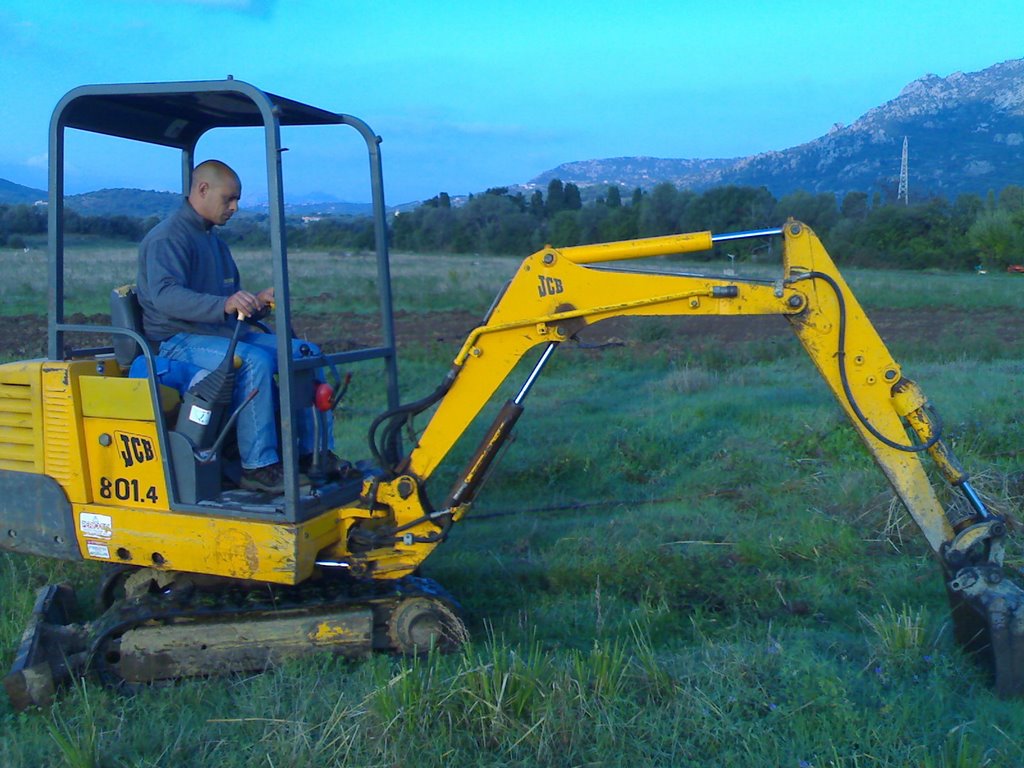
At mid august, Domenico, the owner of the land where I keep the nurseries, asked me to move all the plants in the end section of the property, within the firsts rains and not in 6 mo nts as we agreed in the first place.
I thought I could expand the nurseries in that direction in time, so I had ploughed it and got rid of all loose stones.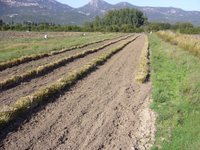
Unfortunately it was not the time to do this operation, neither I had the money or the time to do it, but, I had to follow directions rapidly.
Fortunately I can count on a number of sincere friends to whom I periodically give massive backaches (if they will start avoiding me, I'll understand why).
Thank you Lupin!
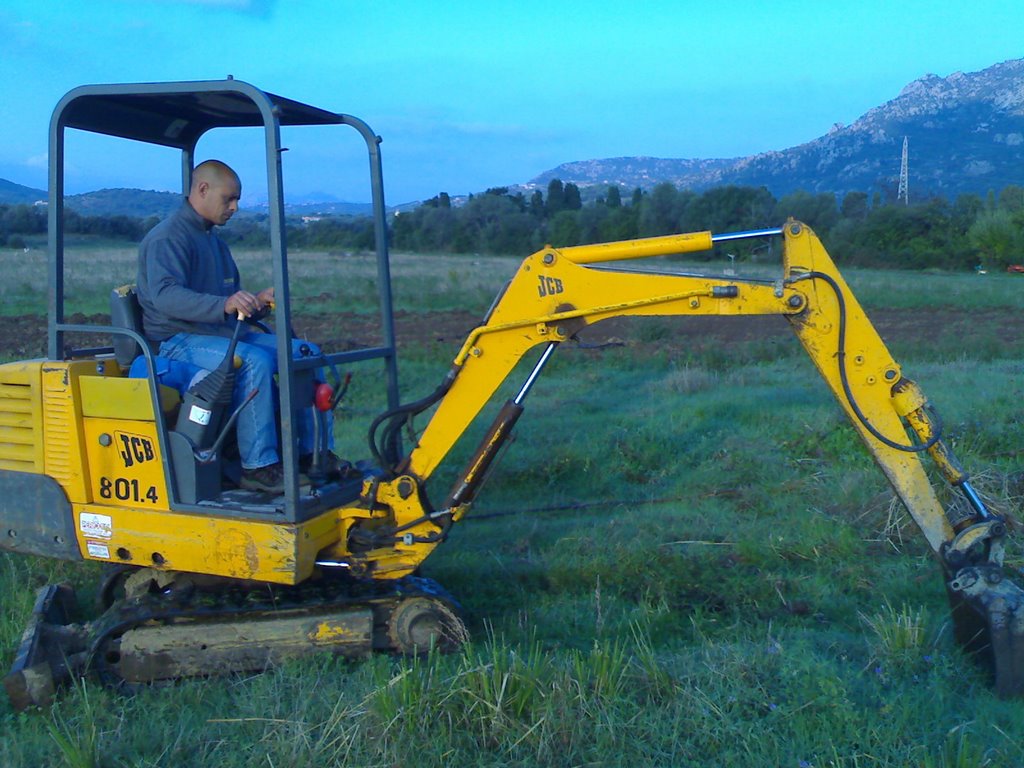
One day of machinery, five days in five at work, and there goes the new nursery.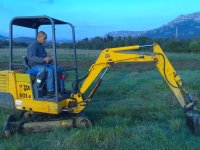
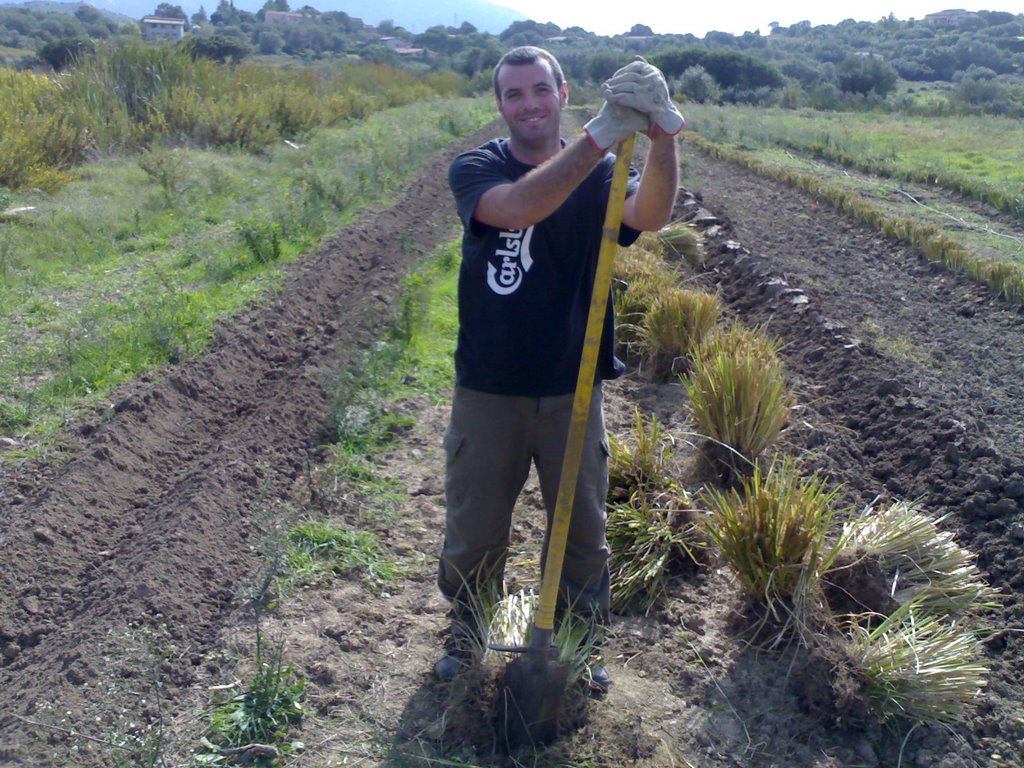 nts as we agreed in the first place.
I thought I could expand the nurseries in that direction in time, so I had ploughed it and got rid of all loose stones.
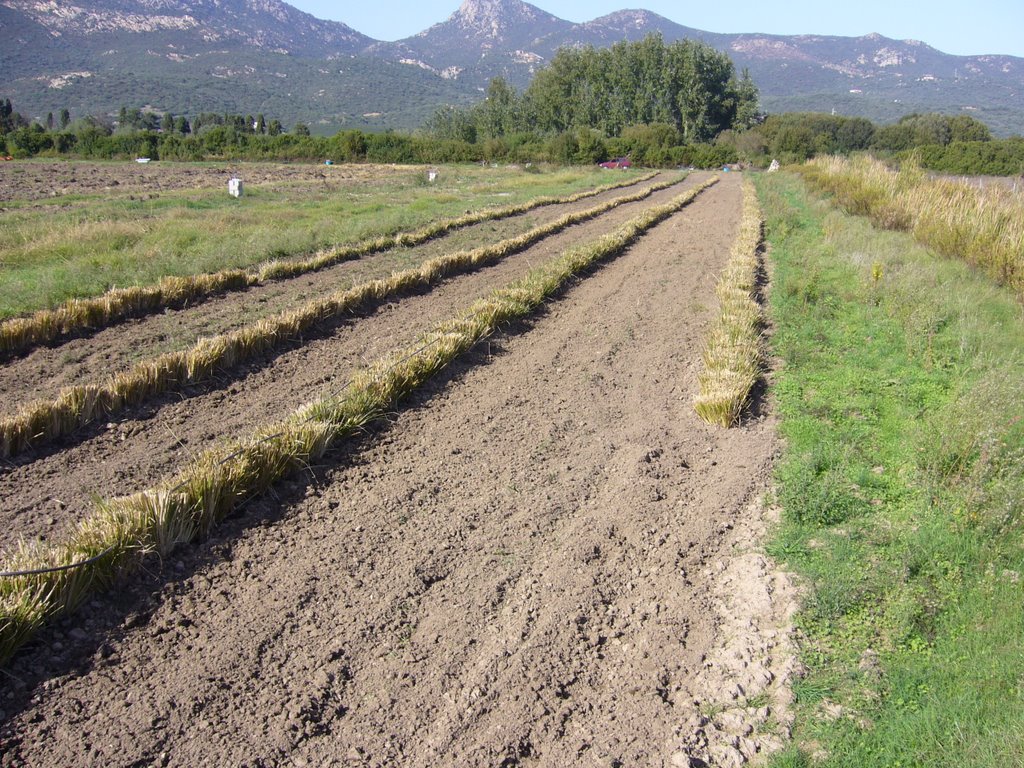
Unfortunately it was not the time to do this operation, neither I had the money or the time to do it, but, I had to follow directions rapidly.
Fortunately I can count on a number of sincere friends to whom I periodically give massive backaches (if they will start avoiding me, I'll understand why).
Thank you Lupin!
One day of machinery, five days in five at work, and there goes the new nursery.
Some facts
The two rows wich I did not care for, are dead.
This has occourred because the planting has been made in May, therefore after the spring boom, and the plants did not have enough time to sink roots deep enough to find humid subsoil (below 50cm) before this dried out definitely in the summer.
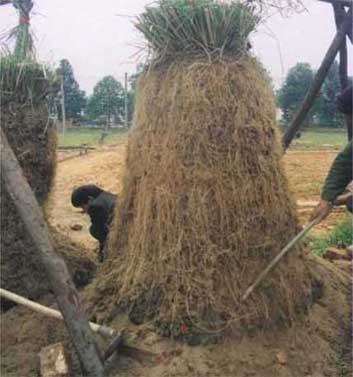
Instead, in the winter period, the soil is constantly humid and its temperature does not inhibit root growth. I deduce that in the plantings made in winter, even if the aerial part dies down, roots keep growing continuosly, reaching whithin the next dry season, deeper layers where a little moisture is always present to guarantee sustainance and allowing the developement of the root system until it reaches important dimensions in 7-10 monts since the planting allowing the cultivation in areas not reached by acqueducts.
On the contrary, plantings made in the spring-summer period, have to be watered deeply at least once for susteinance and several times in order to produce planting material.
The plantings made in the autumn period can be managed without watering, but will have more probability to develope weed infestation because it will go through both autumn and spring boom period therefore the weeds will have plenty of time to establish and grow through a complete cycle from seed to seed.
This has occourred because the planting has been made in May, therefore after the spring boom, and the plants did not have enough time to sink roots deep enough to find humid subsoil (below 50cm) before this dried out definitely in the summer.
Instead, in the winter period, the soil is constantly humid and its temperature does not inhibit root growth. I deduce that in the plantings made in winter, even if the aerial part dies down, roots keep growing continuosly, reaching whithin the next dry season, deeper layers where a little moisture is always present to guarantee sustainance and allowing the developement of the root system until it reaches important dimensions in 7-10 monts since the planting allowing the cultivation in areas not reached by acqueducts.
On the contrary, plantings made in the spring-summer period, have to be watered deeply at least once for susteinance and several times in order to produce planting material.
The plantings made in the autumn period can be managed without watering, but will have more probability to develope weed infestation because it will go through both autumn and spring boom period therefore the weeds will have plenty of time to establish and grow through a complete cycle from seed to seed.
Cross check
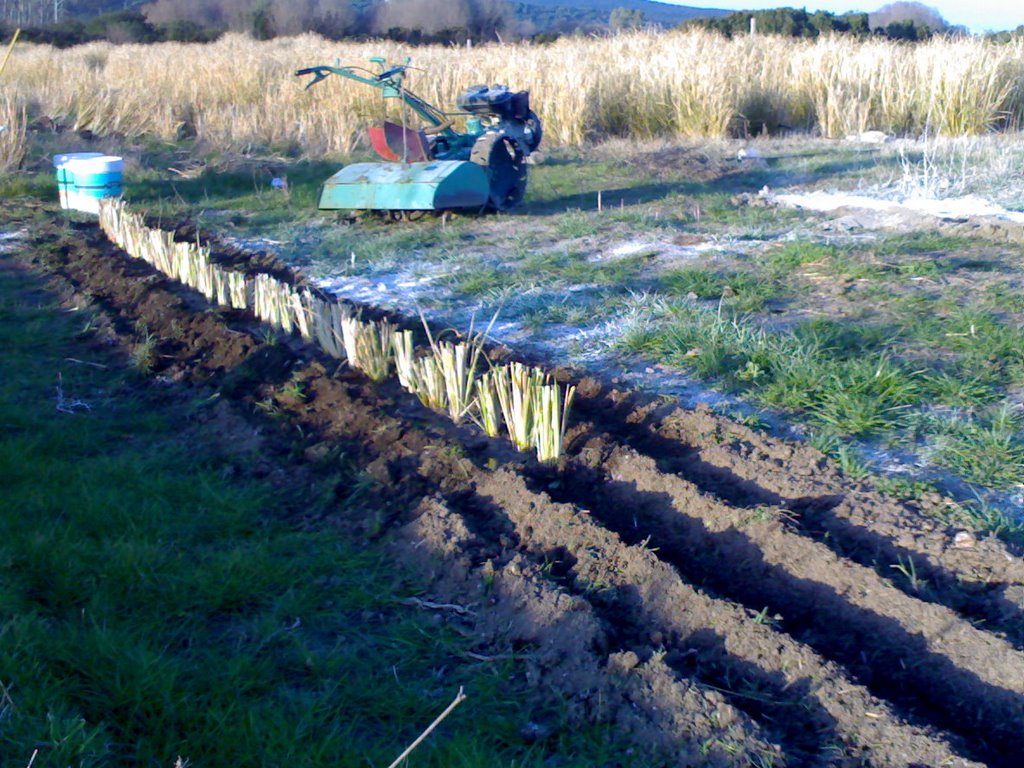
In May, in a period of warm weather, I set out to start a new nursery in another lot which I had cultivated with pumpkins the previous summer, therefore relatively clear of weeds.
I plant four rows 40 meters each, a good slow release nitrogen fertilizer in the furrow and water only while I plant. The only intervention is made in July when I deeply water two rows out of four and I get rid of the major weeds.
I leave everything as it is and I wait the end of August.
The temperature range has not been particularly harsh: we've had the african blob for a couple of weeks only at mid July.
For the rest of the time it has been rather plesant.
I observe
I plant four rows 40 meters each, a good slow release nitrogen fertilizer in the furrow and water only while I plant. The only intervention is made in July when I deeply water two rows out of four and I get rid of the major weeds.
I leave everything as it is and I wait the end of August.
The temperature range has not been particularly harsh: we've had the african blob for a couple of weeks only at mid July.
For the rest of the time it has been rather plesant.
I observe
Surprise!
During the winter, I have a pleasant surprise: almost all plants in the abandoned section which had been planted with the singol tiller tecnique (like rice), have shown up. They managed to survive despite the twitch but they did not develope a particularly strong root system. 
The difference lies in the fact that when you divide a mother plant, in order to produce planting material, together with some 30cm of residual aereal part, and the few centimeters of spare roots, you transplant the true heart of the plant, the crown.
This is a woody section from which the roots depart and on which the tillers are fixed.
On the contrary, when you "sow" the tillers, no matter how many you place, the crown is absent and the plant takes a long time and a lot of energy to make one new.

The difference lies in the fact that when you divide a mother plant, in order to produce planting material, together with some 30cm of residual aereal part, and the few centimeters of spare roots, you transplant the true heart of the plant, the crown.
This is a woody section from which the roots depart and on which the tillers are fixed.
On the contrary, when you "sow" the tillers, no matter how many you place, the crown is absent and the plant takes a long time and a lot of energy to make one new.
Giant leap
At the end of winter, with some spare money obtained with small jobs around, I buy myself a Ferrari: a rotative hoe, 12 horse power with a 80 cm wide hoe section and furrow excavator; four speed plus reverse. Cool! 
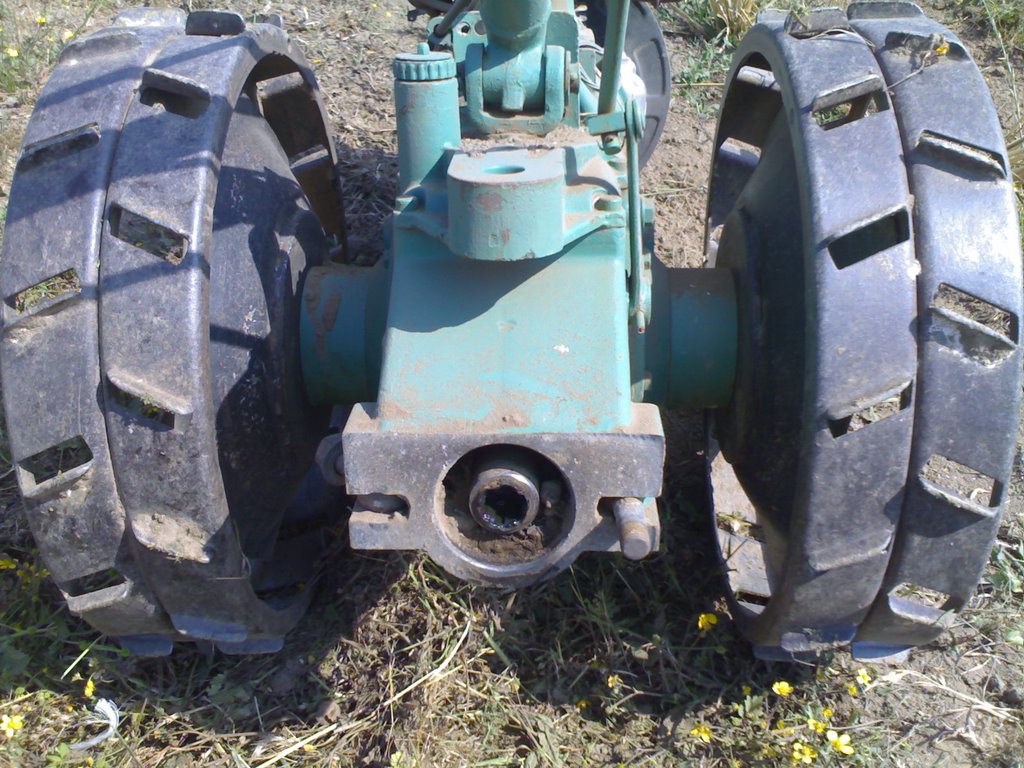
I get in association with another mad one, the good Marta.
Us three, (the two mad ones and the Ferrari) set out to prepare a new nursery for a thousand new plants: five rows of more than 50 m each, spaced three meters.
We finish by the first of may, Titans stuff! Unfortunately Marta has to leave Sardynia and the new nursery at the beginning of July and goes back to Rome.
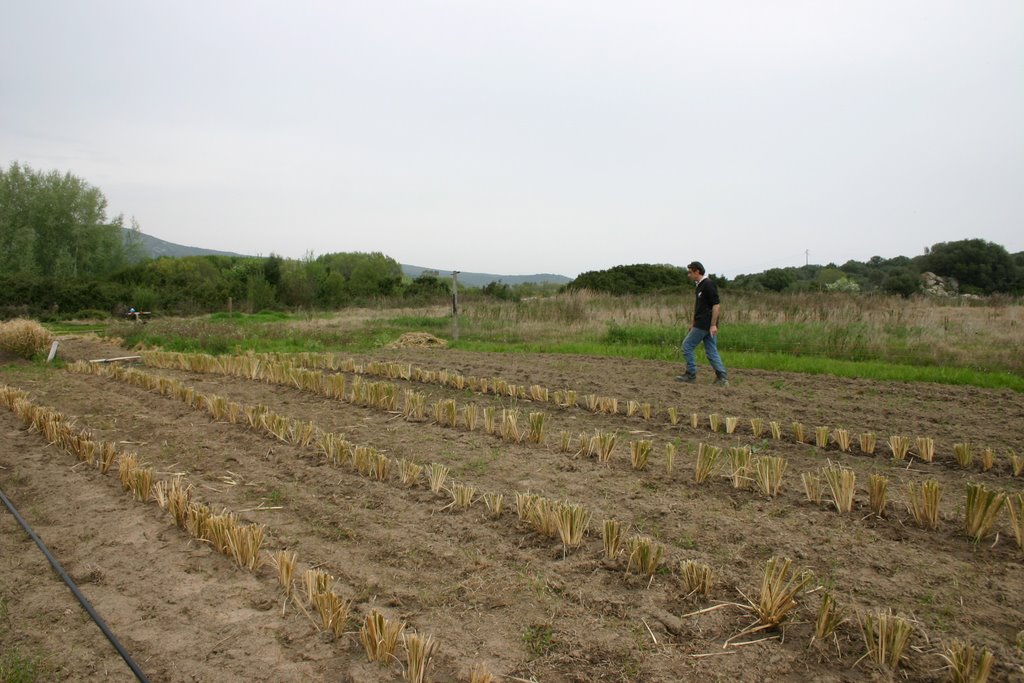
The new nursery, this time is irrigater with a very light dripping line which costs 18 cent of euro/meter and comes in large rolls of 3km.
Waterings are limited to only five in the intire summer period, and in the furrow, before planting, i put a slow release nitrogen fertilizer.This factor, of course, makes a great deal of difference and by september the hedges are fully established and is not easy to walk between them.
A great result. Grazie Martina
Improving the tecnique
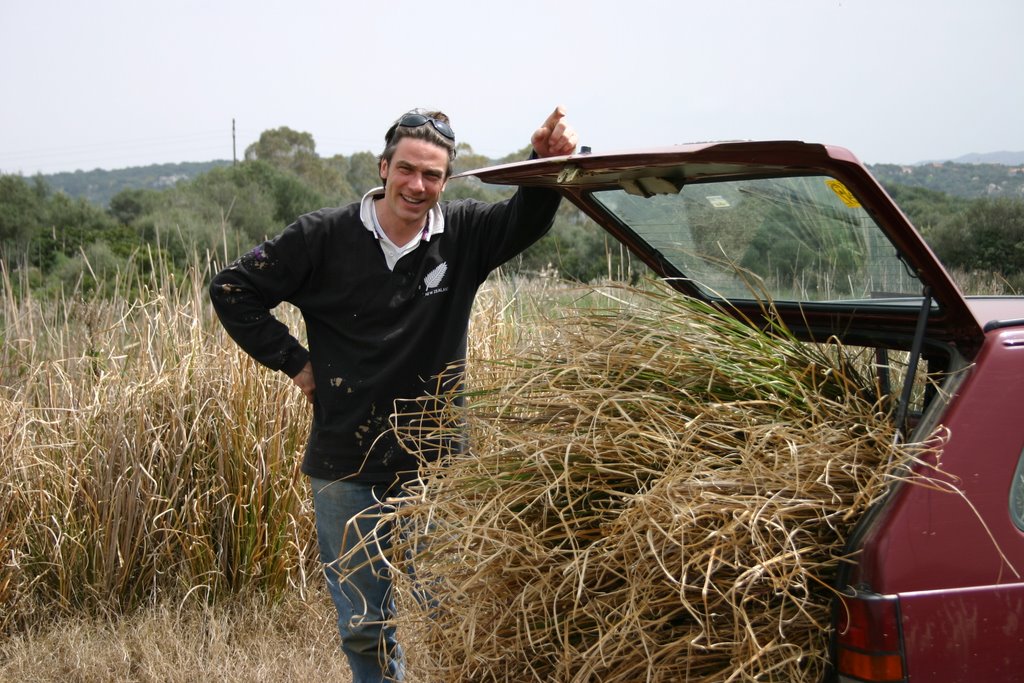
Spurred by the good results obtained in the nursery, at the beginning of the summer, I set out to plant a new one of 400 new plants, so I follow the same method which consists in cutting away almost all roots and the loss of the aerial part above 30 cm height.
The soil is allready hard like the granite who generated it in the firstplace, but with water and a sharp hoe, I manage.
The furrows are ready, spring boom is behind the shoulders and temperatures are definitely in line with the summer period.
This time I limit waterings since radicated plants have sustained the african blob of 2003 with ease.This second nursery did not suffer the weeds: the period of planting, the watering regime with rare but deep drip irrigations convinceme to adopt this new method.
For that year I can consider myself satisfied and I just keep listening.
The soil is allready hard like the granite who generated it in the firstplace, but with water and a sharp hoe, I manage.
The furrows are ready, spring boom is behind the shoulders and temperatures are definitely in line with the summer period.
This time I limit waterings since radicated plants have sustained the african blob of 2003 with ease.This second nursery did not suffer the weeds: the period of planting, the watering regime with rare but deep drip irrigations convinceme to adopt this new method.
For that year I can consider myself satisfied and I just keep listening.
First great results
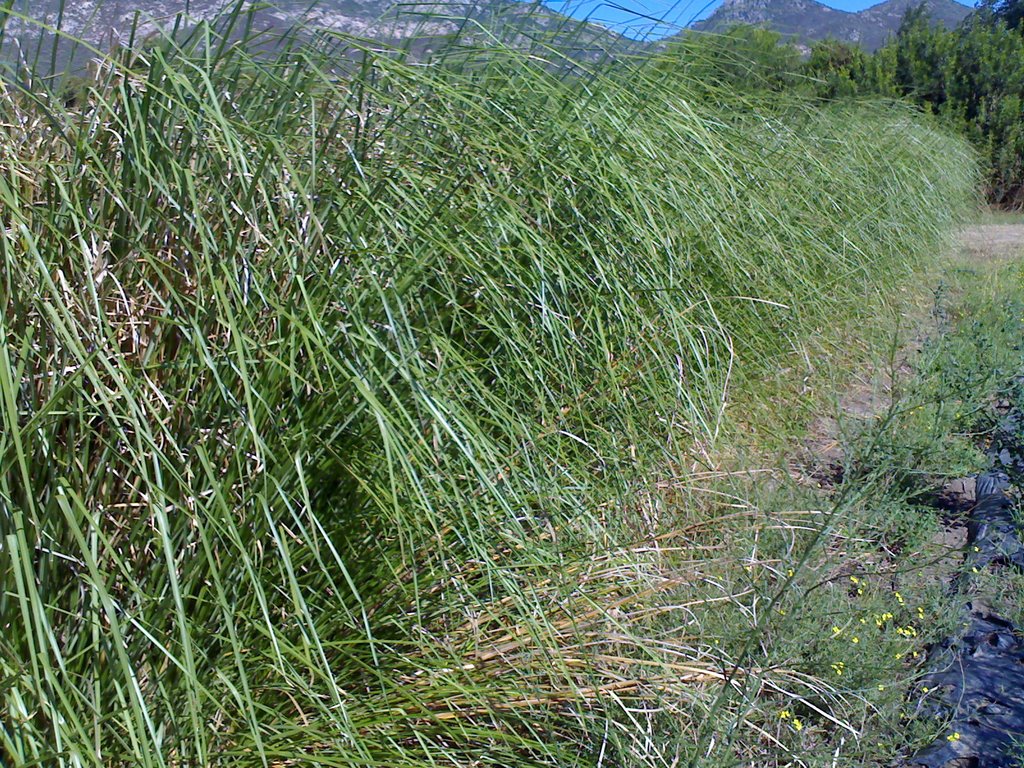
When the minimum temperatures rise definitely above 10°, the crusty soil,compacted by the winter rains and poor of organic matter,starts cracking all around the base of the new plants and, in a week, a new generation of tillers explodes. At least 8-12 each strip,reaching in the same time 40-50 cm high.
I couldn't believe it!
The plants I divided with the axe, had sacrificed all activities above soil level concentrating on the rooting, leaving to the spring time, after easter, the resurrection above land.
I attend them for all the spring with water twice a week and fertilizer, meanwhile weeds take their toll; spring conditions and fertilizer pushes them to come out in massive numbers and the furrows dug in september to accomodate the new nursery is now land of pioneer weeds whose seed rested dormant in the subsoil.
Frequent automatic waterings top up the mess, so whilst clearing it all up, I start making in my mind a list of mistakes
NOT TO BE REPETED.
On the contrary, instead, the single tiller plantings don't seem to produce results at all, they lie submerged by hungry hordes of twitch roots who travel in the soil like starships at near-light speed.
I decide to abandone this section and forget about it.
I couldn't believe it!
The plants I divided with the axe, had sacrificed all activities above soil level concentrating on the rooting, leaving to the spring time, after easter, the resurrection above land.
I attend them for all the spring with water twice a week and fertilizer, meanwhile weeds take their toll; spring conditions and fertilizer pushes them to come out in massive numbers and the furrows dug in september to accomodate the new nursery is now land of pioneer weeds whose seed rested dormant in the subsoil.
Frequent automatic waterings top up the mess, so whilst clearing it all up, I start making in my mind a list of mistakes
NOT TO BE REPETED.
On the contrary, instead, the single tiller plantings don't seem to produce results at all, they lie submerged by hungry hordes of twitch roots who travel in the soil like starships at near-light speed.
I decide to abandone this section and forget about it.
The propagation
The first 400 propagations, made in september 2003, are planted with a hoe in lines long some 15 meters, one plant every 30cm. and watered with a good quality dripping line. Each plant counts some five or six strips.
Meanwhile in another portion of the same hectare, I try out a different planting system: I prepare a strip of land some 40 meters long, one meter wide, served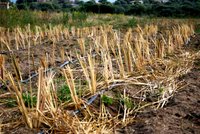 by the same kind of dripping line, after preparing a sufficient number of strips, I proceed sinking them for about 30cm in number of three or four strips around the dripper; practically I transplant them in wet soil a bit like you would do with rice. (That is why the seminator)
Monts go by and in january I'm allready convinced that I must have made
some kind of mistake because the aerial part of all plants with no ecceptions turned straw colour and died down.
Not a shade of green anywere.
Meanwhile in another portion of the same hectare, I try out a different planting system: I prepare a strip of land some 40 meters long, one meter wide, served
 by the same kind of dripping line, after preparing a sufficient number of strips, I proceed sinking them for about 30cm in number of three or four strips around the dripper; practically I transplant them in wet soil a bit like you would do with rice. (That is why the seminator)
Monts go by and in january I'm allready convinced that I must have made
some kind of mistake because the aerial part of all plants with no ecceptions turned straw colour and died down.
Not a shade of green anywere.
The boom
Spring was very rainy and in april 2003 a wreckless summer blows up.
In may I start noticing some green at the base of the plants and I decide to cut them at some 30 cm height. In two weeks the plants double their diameter, and I realize that there were no reasons to fear and that erosion is facing its "end of the world weapon".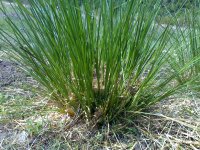
In june arrived the famous african blob of 2003: a high pressure system that keeps minimum temperatures above 30°C, whilst the top temperatures skyrocket above 35-45°C until the end of september.
Not a drop of water for the whole period was given to the plants. They didn't even turn yellow a bit, as if someone would water them during the nigh time while I cynically observed them during the day.
At the end of that month I decide to propagate half of that row, and with a spade I cut the root system 45°all around the plant, then I remove the leaves at about 30 cm; then with a small axe I divide the clumps and I plant back the new plants into the ground.
So I start the first nursery.
In may I start noticing some green at the base of the plants and I decide to cut them at some 30 cm height. In two weeks the plants double their diameter, and I realize that there were no reasons to fear and that erosion is facing its "end of the world weapon".
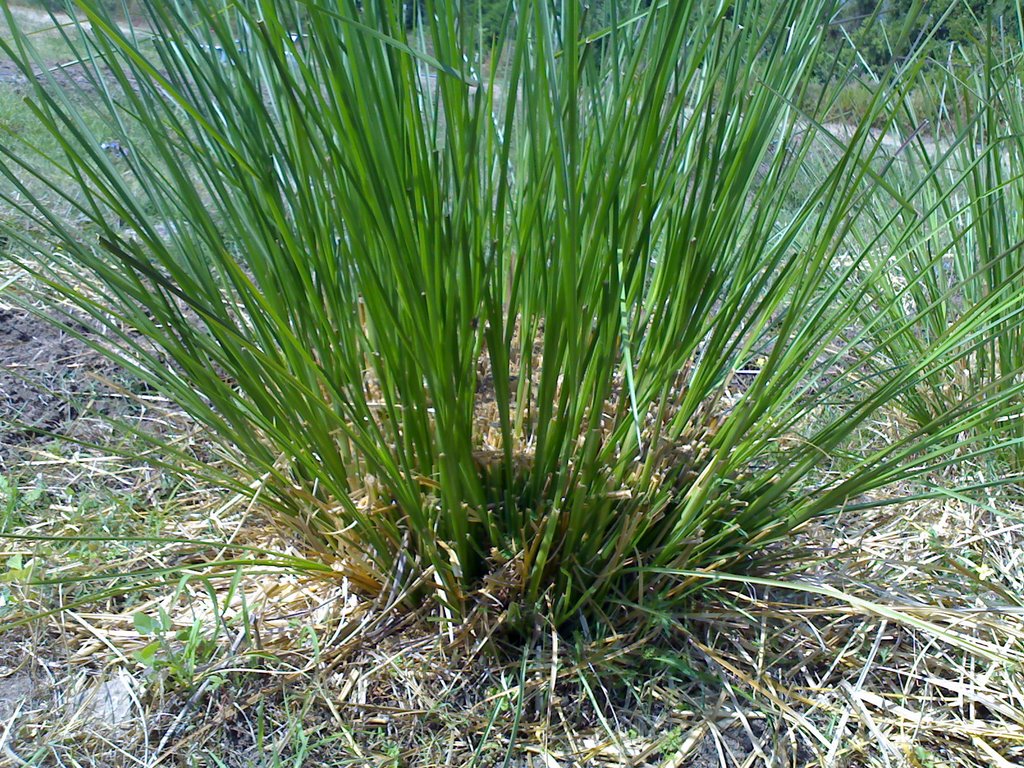
In june arrived the famous african blob of 2003: a high pressure system that keeps minimum temperatures above 30°C, whilst the top temperatures skyrocket above 35-45°C until the end of september.
Not a drop of water for the whole period was given to the plants. They didn't even turn yellow a bit, as if someone would water them during the nigh time while I cynically observed them during the day.
At the end of that month I decide to propagate half of that row, and with a spade I cut the root system 45°all around the plant, then I remove the leaves at about 30 cm; then with a small axe I divide the clumps and I plant back the new plants into the ground.
So I start the first nursery.
Now I watch
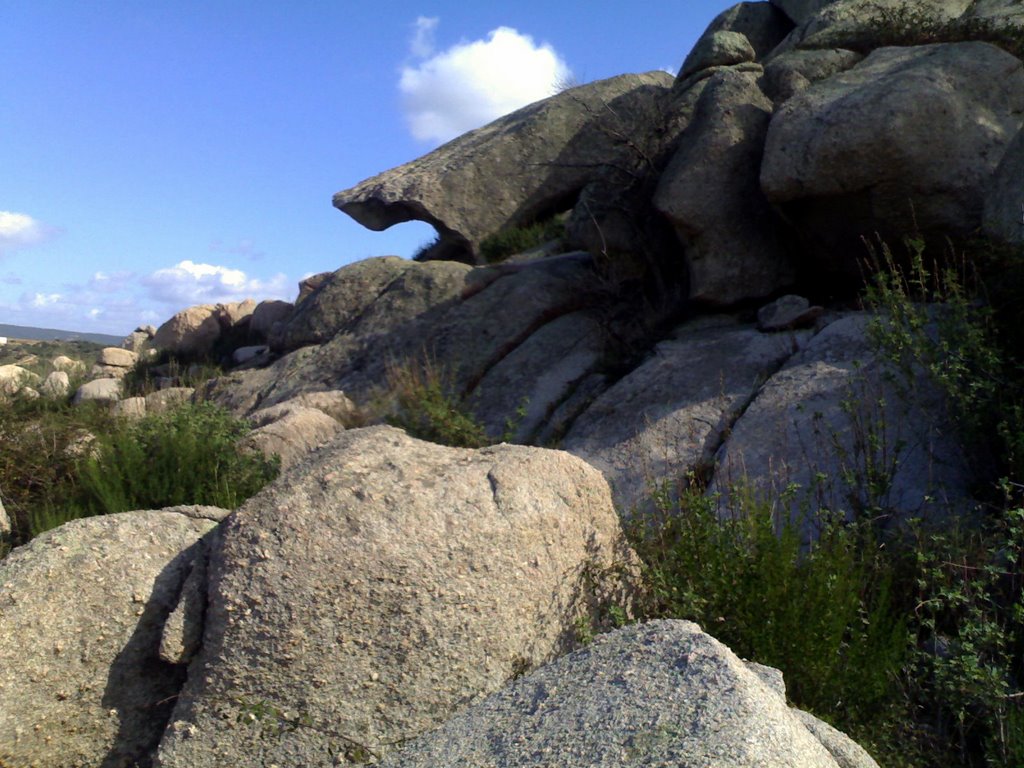
Time goes by, seasons do their cycle and my plants grow;
I keep observing their behaviour with critical eye noticing the influence that soil and climate have on it: In Gallura (Sardynia north east) we have loose soils given by the granites of the area therefore sub acid, some concentrated rains in autumn and spring and drought, severe at times for the rest of the year.
It was allready the end of 2002 and further ahead lied the coldest winter of the past twenty years. It was severe, minimum temperatures dropped below zero for ten days in a row, the aerial part of the plants became a straw wig, I tought I lost them..On the other hand but, if they are not suited to the purpouse, better to know straight away.
I keep listening
I keep observing their behaviour with critical eye noticing the influence that soil and climate have on it: In Gallura (Sardynia north east) we have loose soils given by the granites of the area therefore sub acid, some concentrated rains in autumn and spring and drought, severe at times for the rest of the year.
It was allready the end of 2002 and further ahead lied the coldest winter of the past twenty years. It was severe, minimum temperatures dropped below zero for ten days in a row, the aerial part of the plants became a straw wig, I tought I lost them..On the other hand but, if they are not suited to the purpouse, better to know straight away.
I keep listening
In the field
We're now in 2000; now the necessity that arises is:where do I put all this plants? My garden is full of pots and this plants go very fast.
Domenico offers me to put them in the end section of his land since that is often submerged and the alfalfa (medicago sativa) he grows on eight hectares does not germinate in there; on the other hand, in that same section, me and Rodrigo have been coltivating "rucola" for the whole summer.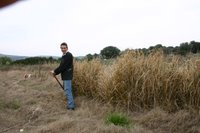
I move them to their new accomodation and I transplant the containers to obtain a first study row of some eighty meters.
Soon the plants develope a robust root system that breaks up the compacted subsoil underneath the plough reach, so that the winter after, despite strong rains, the section is free from the usual pools. BAH!
Domenico offers me to put them in the end section of his land since that is often submerged and the alfalfa (medicago sativa) he grows on eight hectares does not germinate in there; on the other hand, in that same section, me and Rodrigo have been coltivating "rucola" for the whole summer.

I move them to their new accomodation and I transplant the containers to obtain a first study row of some eighty meters.
Soon the plants develope a robust root system that breaks up the compacted subsoil underneath the plough reach, so that the winter after, despite strong rains, the section is free from the usual pools. BAH!
The plants' arrival
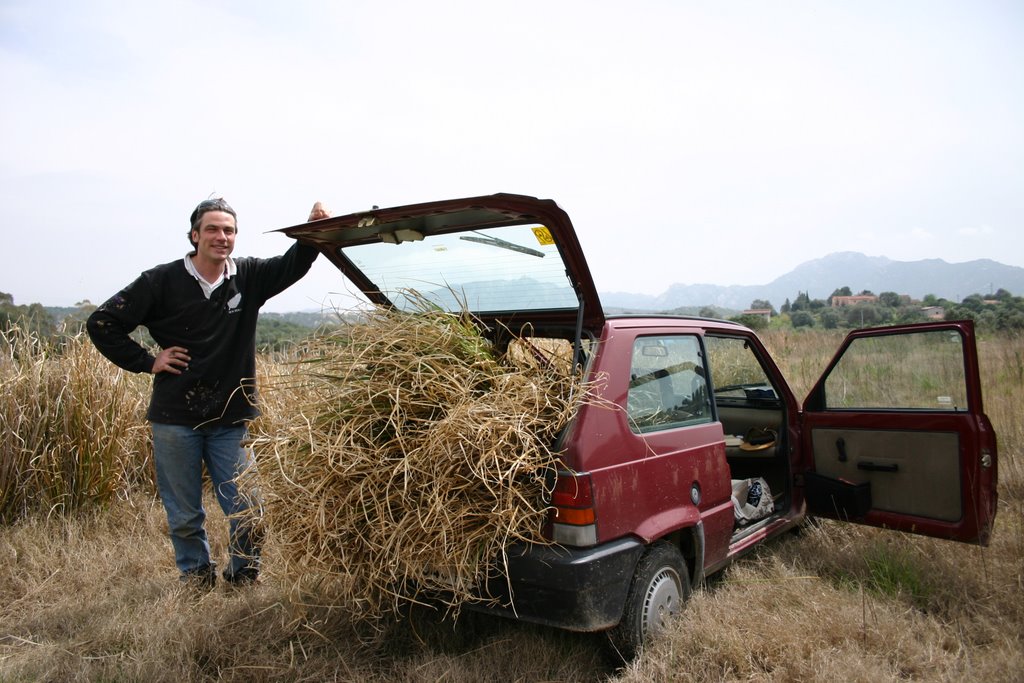
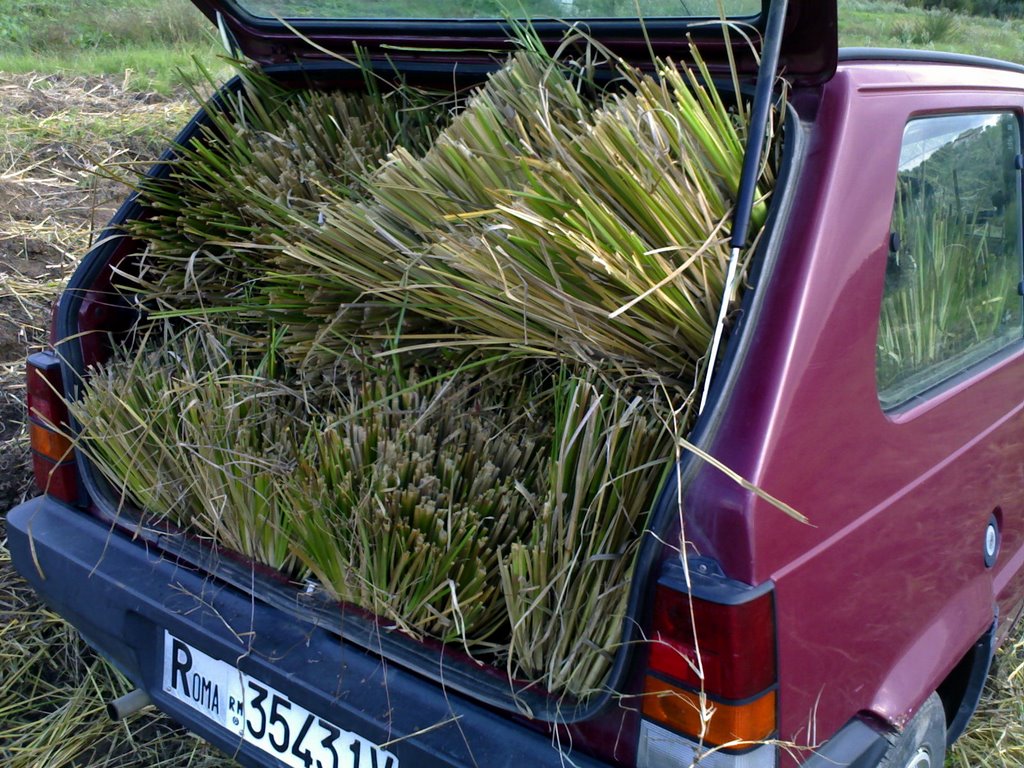
One day that I find myself in Catania in 1999, the good Sardo, goes to work with a hoe and dumps in the trunk of his car more or less70 kg of vetiver clumps Monto variety and he delivers it in the hall of my hotel (I'll never be grateful enough to him). 
I load it on a mercedes taxi making in the trunk the same disaster Sardo did in the hall, and we leave towards the airport. I load the lot in the front hold of the Md80 run by Francesco "ciccio" Angeleri of the Meridiana company (a living mith).
The plants arrive in Olbia and I take them home. Soon I start dividing and I produce some 50 20x20 containers.
I start observing.
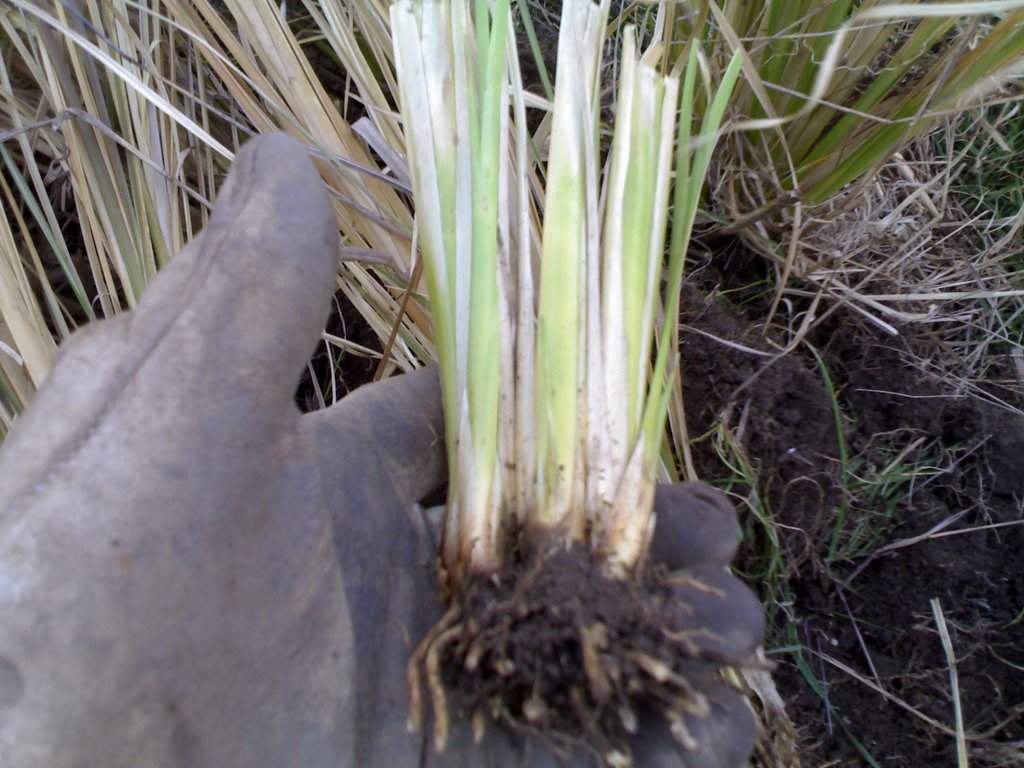
I load it on a mercedes taxi making in the trunk the same disaster Sardo did in the hall, and we leave towards the airport. I load the lot in the front hold of the Md80 run by Francesco "ciccio" Angeleri of the Meridiana company (a living mith).
The plants arrive in Olbia and I take them home. Soon I start dividing and I produce some 50 20x20 containers.
I start observing.
Turning point: the vetiver
After several tries, and almost two years of research, I find on the web this perennial erbaceous plant that satisfies all the conditions when planted in rows.
I get in touch with the network run by a bunch of enthusiasts and I find out that at the moment the plant is being studied by the National Italian Concil for Research (CNR) at the Catania University (Sicily) in order to generate power with it.
I therefore get in touch with professor Sardo who runs the research, a tall red haired man, living memory of past invasions in his land, charismatic person who also conducts studies on salt tollerance and other factors like phitodepuration applications.
And I start hassling him.
I get in touch with the network run by a bunch of enthusiasts and I find out that at the moment the plant is being studied by the National Italian Concil for Research (CNR) at the Catania University (Sicily) in order to generate power with it.
I therefore get in touch with professor Sardo who runs the research, a tall red haired man, living memory of past invasions in his land, charismatic person who also conducts studies on salt tollerance and other factors like phitodepuration applications.
And I start hassling him.
Back to the drawing board
Then I have to start again from the charateristics that the hedge has to produce: low weed potential, capability of maintaning the design, massive vertical root system, capability of sustaining all environmental adversities (fire,cold, drought, submersion, etc.) different soil pH, good palatability for ruminants.
Given theese keywords, I start the search again.
Given theese keywords, I start the search again.
Which solution?
Once decided the method, I set out to decide on the context,
I start considering hundreds of different plants in order to obtain that hedge effect that can reduce erosion. I search textbooks but soon I realize that hedges have to be composed by several kinds of plants,to obtain the beneficial effect of helping the farm economy, adaptability to all terrains and good palatability are conditions which I couldn't abide.The next problem to face is how to maintain the planting design of the hedges in time and how avoid that different species interfere with each other using as little space as possible
I start considering hundreds of different plants in order to obtain that hedge
 effect that can reduce erosion. I search textbooks but soon I realize that hedges have to be composed by several kinds of plants,to obtain the beneficial effect of helping the farm economy, adaptability to all terrains and good palatability are conditions which I couldn't abide.The next problem to face is how to maintain the planting design of the hedges in time and how avoid that different species interfere with each other using as little space as possible
Leave Rome behind
In december 1995 I move to Sardinia, ancient land for the ancients allready, soon I realize that there is an enormous environmental problem of erosion, loss of fertility and hydrogeology due both to deforestation, occourred in the past centuries, and obsolete agricoltural techniques. I set out to find a solution with precise connotations: to reduce erosion and consolidate while producing earnings for the farm economy.
The orientation of this search goes immediately towards vegetative barriers, for their dinamicity and their ease of moltiplication with wirtually no cost and possible multiple side income.
The orientation of this search goes immediately towards vegetative barriers, for their dinamicity and their ease of moltiplication with wirtually no cost and possible multiple side income.
1995 All Starts
All started in1995 when I came back to Italy after a degree in TV production in Australia at Charles Sturt University in Wagga Wagga.
The final work I presented was a naturalistic documentary and its title was: "Alternatives to conventional agricolture".
I never thougth I could find my path this way
The final work I presented was a naturalistic documentary and its title was: "Alternatives to conventional agricolture".
I never thougth I could find my path this way
Iscriviti a:
Post (Atom)


 Post
Post